


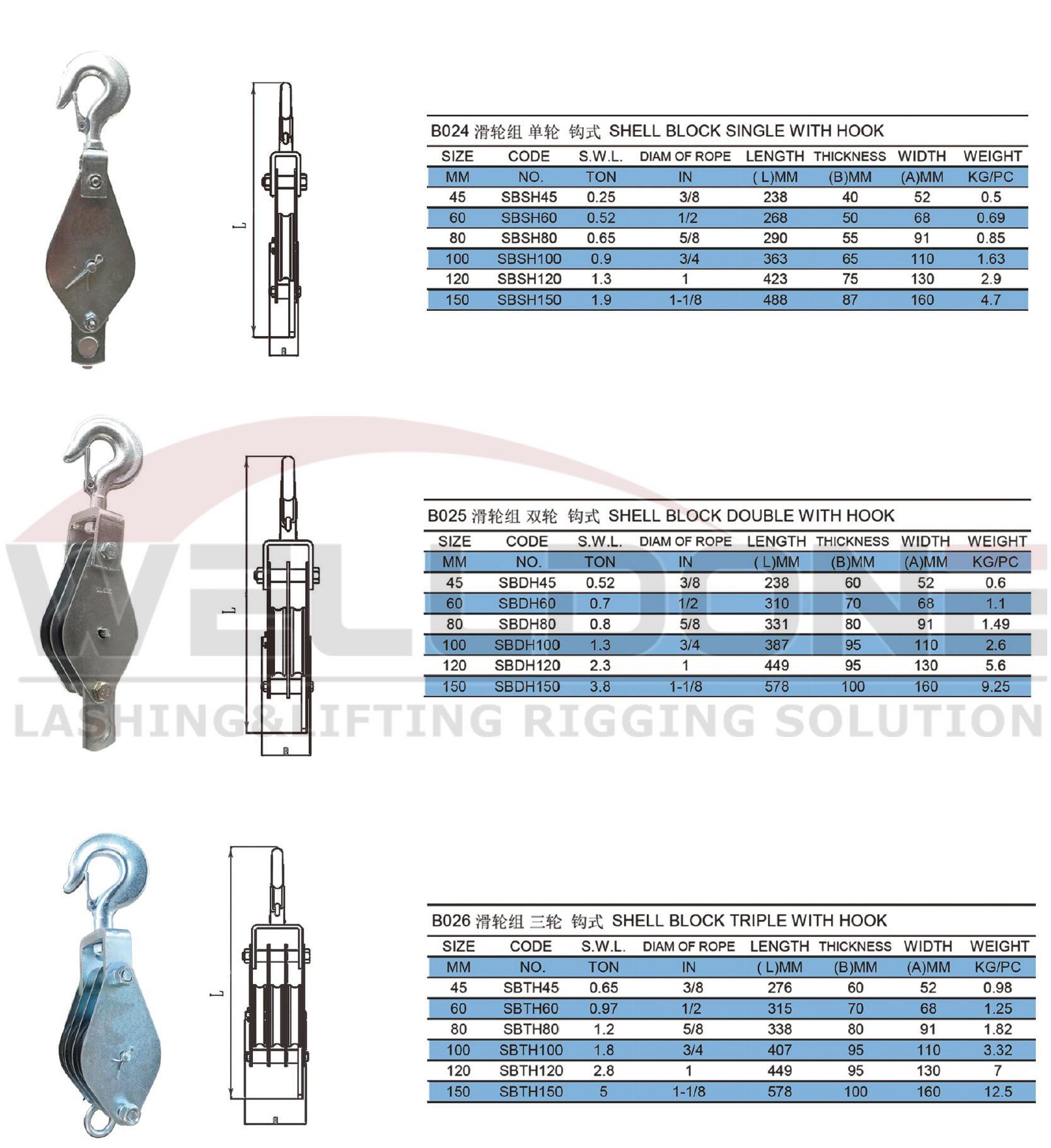
Construction 1 / 2 / 3 Single / Double / Triple Sheave Rope Shell Block Pulley with Hook


Rope shell block is mechanical device designed to guide ropes and help lift, lower, or move loads. By allowing a rope to run over a rotating sheave, these devices can reduce friction and, in multi-sheave systems, provide mechanical advantage to make lifting operations easier.
Rope pulleys are widely used in construction, marine applications, industrial material handling, workshops, agriculture, and general rigging. Selecting the right pulley according to rope size, load capacity, material, and working environment is essential for safe and reliable performance.
Key Features of Rope Pulleys
1. Smooth Rope Movement
A properly designed sheave helps guide the rope and reduce friction during operation. The groove should be compatible with the rope diameter and construction to minimize unnecessary wear.
2. Durable Construction
Depending on the intended application, rope pulleys can be manufactured from steel, stainless steel, aluminum, or other suitable materials. The choice depends on the required strength, weight, corrosion resistance, and operating conditions.
3. Versatile Configurations
Single and multiple sheaves provide different rope-routing options. Fixed pulleys can change the direction of pulling, while suitable movable-pulley arrangements can provide mechanical advantage.
4. Wide Range of Applications
Rope pulleys are used in lifting systems, marine rigging, construction equipment, workshops, and general material handling where compatible ropes and rated components are required.
Common Applications:
Construction and building maintenance: Rope pulleys can help guide ropes used to raise or lower compatible materials and equipment.
Marine and boating: Suitable pulleys are used in rope-handling systems, sail controls, and other marine rigging applications. Corrosion-resistant materials are especially useful in saltwater environments.
Industrial material handling: Rope blocks can be incorporated into selected equipment and manual handling systems to guide ropes and assist with load movement.
Agriculture and workshops: Pulleys are useful for routing ropes and operating compatible manual mechanisms.
Outdoor and general-purpose rigging: Depending on their design and rating, rope pulleys can be used in suitable rope-handling and tensioning arrangements.
How to Choose the Right Rope Pulley
Before purchasing motones para soga, consider the following factors:
- Rope diameter: Choose a sheave groove suitable for the specified rope size and construction.
- Working load limit (WLL): Verify the rated capacity of the pulley and the complete system. Do not confuse breaking strength with allowable working load.
- Material: Select steel for suitable heavy-duty applications, stainless steel for corrosion resistance, or aluminum where reduced weight is important and the rating is adequate.
- Sheave configuration: Choose a single or multiple sheave arrangement according to the rope path and required mechanical advantage.
- Bearing design: Plain bearings or rolling bearings may be suitable depending on operating speed, load, and duty cycle.
- Connection method: Check that the mounting eye, hook, shackle, or other attachment is compatible with the support and intended application.
- Operating environment: Consider moisture, saltwater, dust, chemicals, temperature, and exposure to abrasion.
Model Number: B024/25/26

-
Cautions:
A ratchet pulley with automatic stop should be used only within its specified capacity.
Before use, inspect the pulley body, sheave, axle, ratchet mechanism, and rope-contact surfaces for signs of damage or excessive wear. Make sure the automatic-stop mechanism engages correctly before applying the working load.
The pulley should not be overloaded, shock-loaded, or used for lifting people unless it has been specifically designed, tested, and certified for that purpose.


Products categories
-

0.75-9Ton HSH-VA Type Chain Hoist Lever Block
-

Safety Confined Space Tripod Rescue Winch Adjus...
-

Wire Rope Cable Hand Ratchet Puller Hoist Come ...
-

Zinc Alloy Die Cast Fixed Type Single Double Wh...
-

Polyamide Nylon Sheave Deflection Ratchet Rope ...
-

7111 Open Type Single Sheave Wire Rope Lifting ...