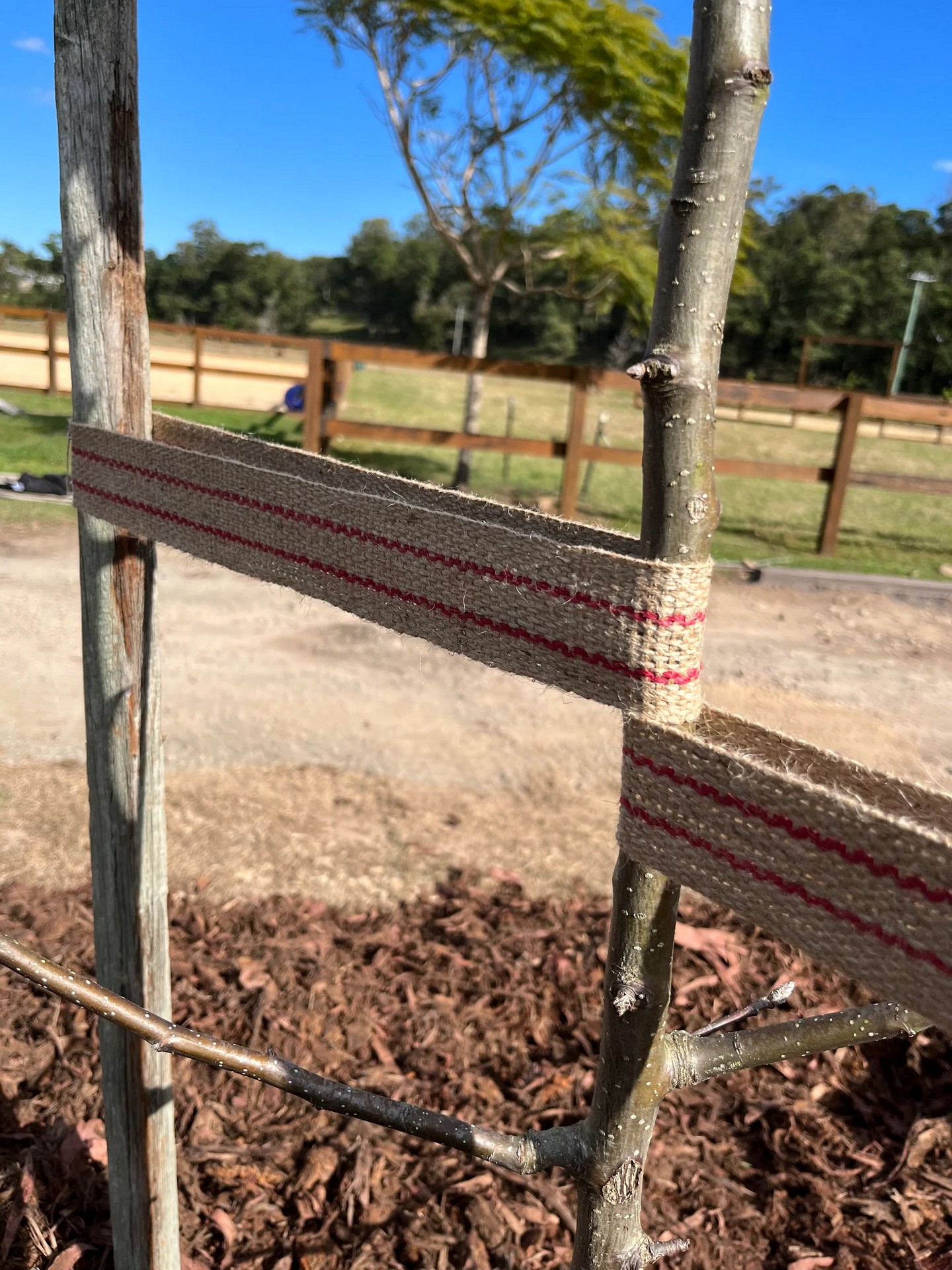
Biodegradable Eco-friendly Natural Jute Webbing Tree Tie for Garden Landscape


When planting young trees, providing proper support during the early stages of growth is important. A newly planted tree may need temporary stabilization against wind and movement while its root system becomes established. Biodegradable natural jute webbing tree ties offer a simple, practical, and environmentally friendly solution for supporting trees, shrubs, and other garden plants.
Made from natural jute fiber, this type of tree tie combines flexibility, adequate strength, and biodegradability, making it particularly suitable for gardens, landscaping projects, nurseries, and environmentally conscious planting applications.
A natural jute webbing tree tie is a flat, woven strap manufactured from natural jute fibers. It is designed to secure a young tree to a supporting stake while allowing some natural movement.
Unlike rigid supports, flexible webbing can move with the tree in the wind. This allows the trunk to develop naturally while the stake and tie provide additional stability during the establishment period.
After the tree becomes sufficiently established, the temporary support can be removed. Because jute is a natural plant-based fiber, the material is biodegradable under suitable environmental conditions.
Key Features of Jute Webbing Tree Ties
1. Natural and Biodegradable Material
Jute is a natural bast fiber obtained from plants. Jute webbing can provide an alternative to conventional synthetic plastic-based tree ties for applications where the use of natural materials is preferred.
At the end of its useful service period, untreated natural jute can naturally break down under appropriate environmental conditions.
2. Soft and Flexible
The woven structure of jute webbing provides flexibility and helps distribute contact pressure over a wider area than a thin cord or wire.
When properly installed, the broad strap can reduce concentrated pressure against the tree bark.
3. Suitable for Young Trees
Young trees often require temporary support after planting, particularly in exposed locations or areas subject to strong wind. Jute webbing can be used to connect the tree to one or more support stakes.
4. Natural Appearance
The characteristic natural color and texture of jute blend well with gardens, landscaping, parks, and nursery environments.
For landscape designers and gardeners who prefer natural-looking materials, jute webbing provides a less visually intrusive alternative to brightly colored synthetic ties.
5. Easy to Cut and Install
Jute webbing can generally be cut to the required length and secured around the tree and supporting stake. This makes it convenient for nurseries, landscaping contractors, gardeners, and DIY users.
Applications in Gardening and Landscaping
Natural jute webbing tree ties can be used for a variety of temporary plant-support applications, including:
- Supporting newly planted trees
- Securing saplings to tree stakes
- Nursery tree support
- Garden landscaping
- Park and public-area planting
- Orchard establishment
- Reforestation and planting projects
- Supporting shrubs and larger plants
- Eco-friendly gardening projects
The appropriate tie configuration depends on the size of the tree, planting location, wind conditions, and support system.
How to Use a Jute Tree Tie
A typical installation involves a tree stake positioned near the young tree. The jute webbing is then attached between the stake and the tree trunk.
The tie should provide support without tightly restricting the natural movement or growth of the trunk.
A practical installation method is:
- Position the support stake securely in the ground.
- Wrap the jute webbing around the trunk without excessive tension.
- Attach the other end to the stake using a suitable knot or fastening method.
- Check the clearance around the trunk to ensure the tie is not cutting into the bark.
- Inspect the tie periodically as the tree grows.
- Remove or adjust the support when appropriate once the tree has developed sufficient root stability.
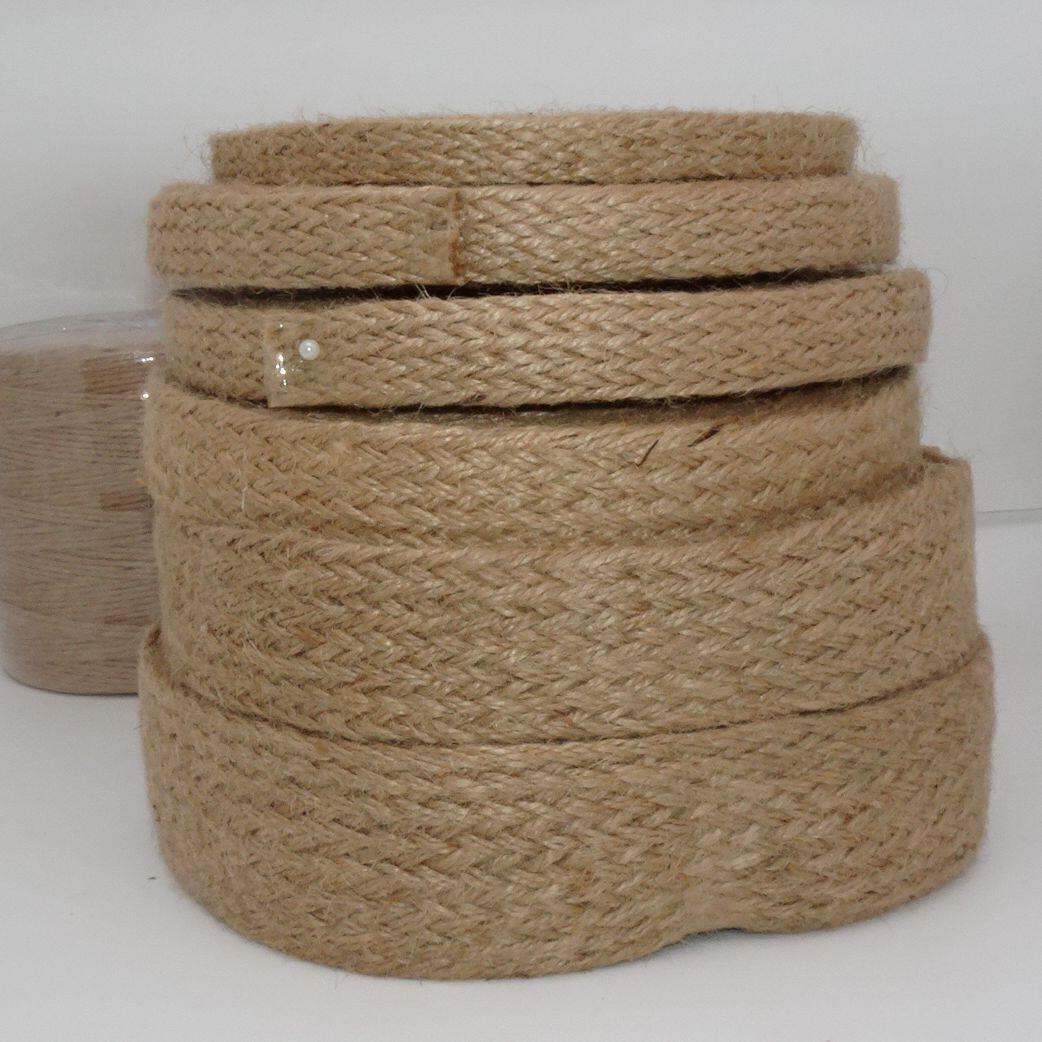
Model Number: WDJWTT-20
-
Cautions:
Although jute is an environmentally friendly natural fiber, it is not intended to remain permanently around a growing tree.
Because natural fibers can absorb moisture and gradually degrade when exposed to outdoor conditions, the service life of jute webbing depends on factors such as rainfall, humidity, sunlight, temperature, and soil conditions.
For this reason, users should regularly inspect the tie and ensure that it does not become embedded in the expanding trunk.
The objective of a tree tie is temporary support, not permanent restraint.