


1/2 Single/Dual Speed Electric Chain Hoist with Trolley for Industrial


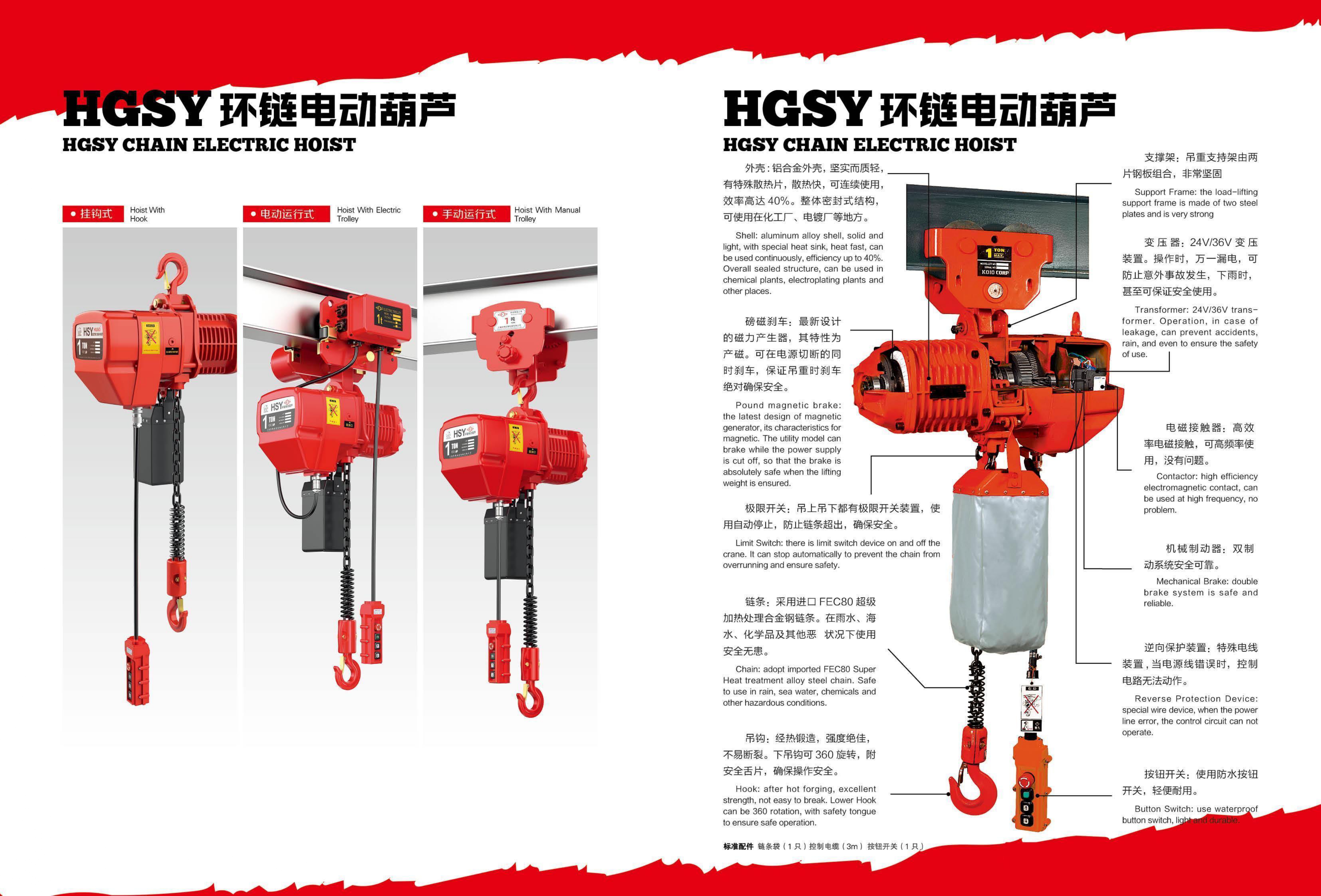
An electric chain hoist is a powerful and efficient lifting device designed to raise, lower, and position heavy loads with minimal manual effort. Driven by an electric motor, it uses a high-strength load chain and a precision-engineered lifting mechanism to provide reliable and controlled lifting operations.
Compared with manual chain hoists, electric chain hoists significantly improve working efficiency, reduce labor intensity, and offer greater convenience in handling repetitive lifting tasks. They are widely used in factories, warehouses, workshops, construction sites, logistics centers, and various industrial applications.
An electric chain hoist consists of several key components that work together to ensure safe and efficient lifting.
- Electric Motor: Provides the driving force for lifting and lowering loads. Motors are generally designed for frequent starting and stopping under specified duty conditions.
- Load Chain: Made from high-strength alloy steel, the load chain is specially engineered to withstand heavy loads and repeated lifting cycles.
- Chain Wheel (Load Sheave): Engages with the load chain and transfers the motor’s driving force to the lifting mechanism.
- Gearbox: Transmits and reduces motor speed while increasing the torque required for lifting operations.
- Electromagnetic Brake: Automatically holds the load when the motor stops or the power supply is interrupted, helping prevent uncontrolled lowering.
- Chain Container: Collects and stores the unloaded portion of the chain during operation.
- Upper and Lower Hooks: Provide secure connection points for the hoist suspension and lifting loads. Hooks are normally equipped with safety latches.
- Control System: Allows operators to control lifting and lowering movements through a pendant control or remote control.
Key Features and Advantages
Electric chain hoists offer several advantages that make them suitable for demanding industrial lifting operations.
High Lifting Efficiency
Powered by an electric motor, the hoist can lift heavy loads quickly and consistently, reducing manual labor and improving productivity.
Compact and Lightweight Design
Compared with many traditional lifting devices, electric chain hoists feature a relatively compact structure, making them suitable for installations where space is limited.
High-Strength Load Chain
The alloy steel load chain provides excellent strength and wear resistance when properly manufactured, maintained, and used within its rated capacity.
Reliable Braking System
An electromagnetic brake helps hold the suspended load securely when lifting or lowering stops, including during power interruptions.
Easy Operation
Pendant controls or wireless remote controls allow operators to manage lifting and lowering conveniently from a suitable operating position.
Versatile Installation
Electric chain hoists can be installed in fixed configurations or combined with manual or electric trolleys to meet different operational requirements.
Types of Electric Chain Hoists
Electric chain hoists are available in different configurations to accommodate various lifting requirements.
Single-Speed Electric Chain Hoist
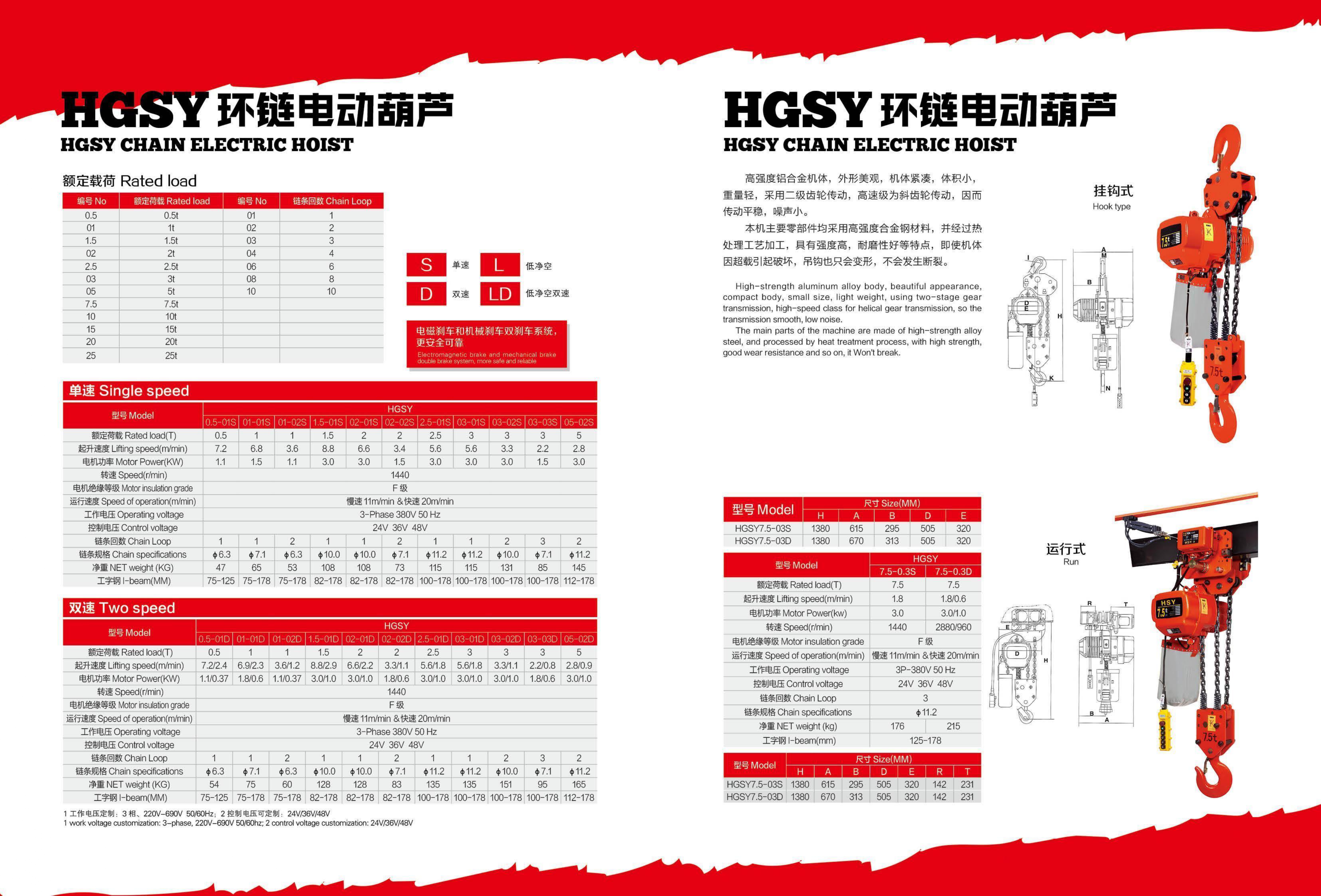
A single-speed electric chain hoist operates at one fixed lifting speed. It is a practical and economical choice for general material-handling applications where precise speed adjustment is not essential.
Dual-Speed Electric Chain Hoist
A dual-speed electric chain hoist provides both high-speed and low-speed lifting functions. The high speed improves productivity, while the low speed allows more accurate positioning of loads. It is particularly suitable for assembly lines, machinery installation, and applications requiring greater positioning control.
Fixed Electric Chain Hoist
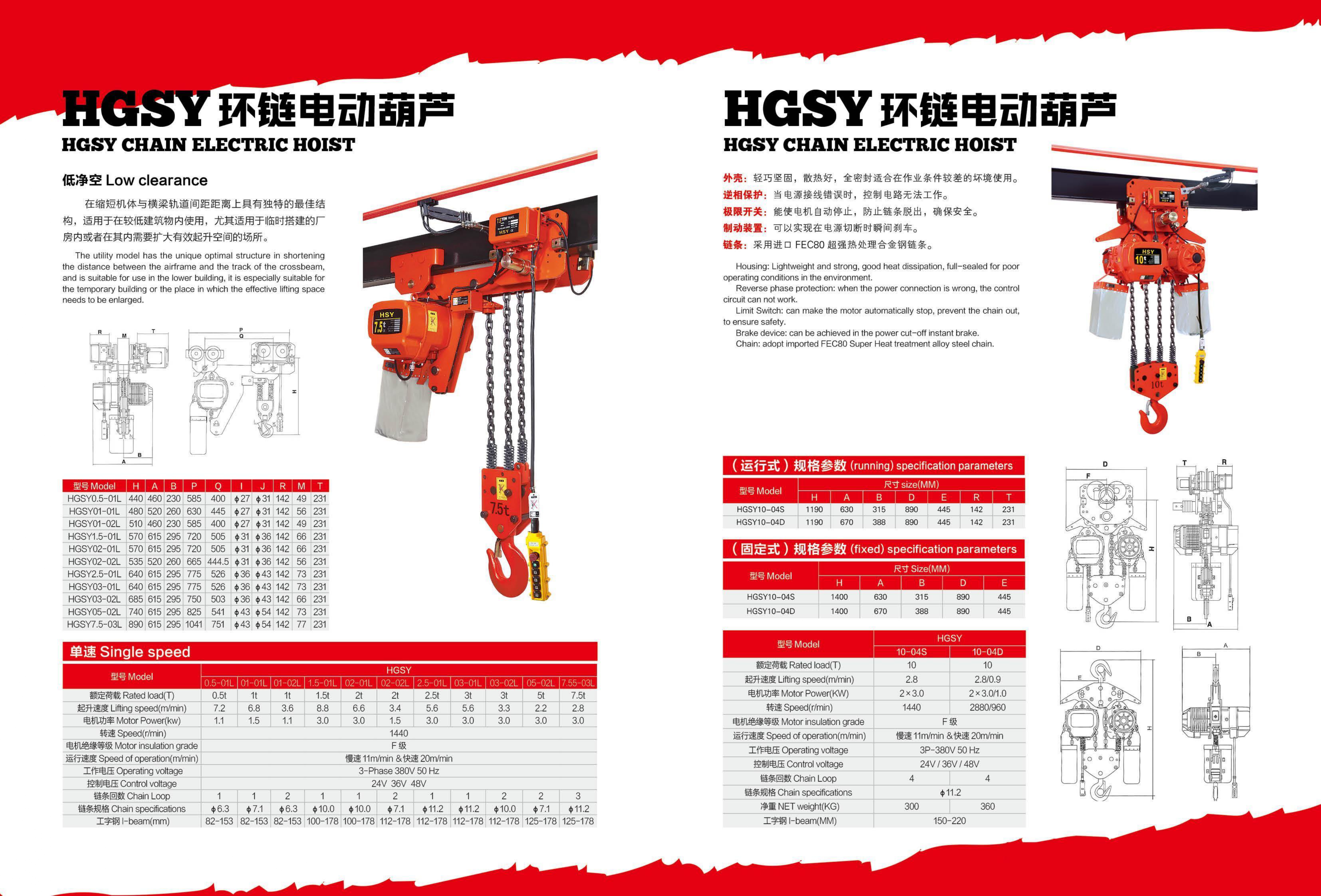
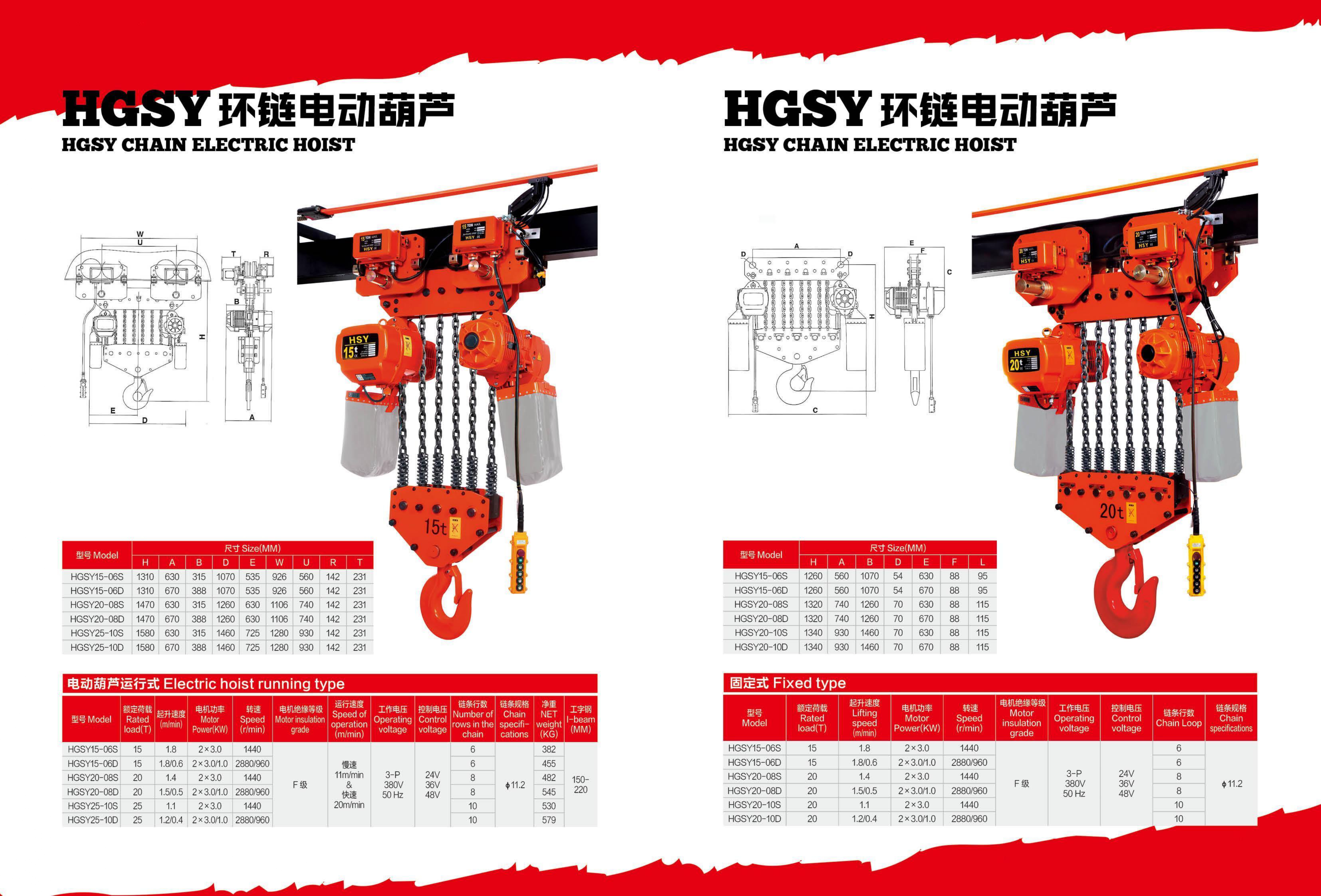
A fixed electric chain hoist is installed in a stationary position, usually on a support structure or lifting frame. It is suitable for repetitive lifting operations within a designated working area.
Electric Chain Hoist with Electric Trolley
Equipped with an electric trolley, this type of hoist can travel horizontally along an I-beam or compatible runway system while lifting loads vertically. It offers greater flexibility and is widely used in production workshops, warehouses, and industrial lifting systems.
Electric Chain Hoist with Manual Trolley
This configuration combines an electric lifting mechanism with a manually operated trolley. The load can be lifted electrically and moved horizontally by pushing or pulling the trolley along the beam.
Applications of Electric Chain Hoists
Electric chain hoists are widely used across various industries, including:
- Manufacturing: Lifting machinery components, raw materials, and finished products on production lines.
- Warehousing and Logistics: Loading, unloading, and transferring heavy goods in storage and distribution facilities.
- Automotive Industry: Handling engines, vehicle components, and assembly equipment.
- Construction: Lifting building materials, tools, and equipment at construction sites, subject to suitable installation and environmental conditions.
- Metalworking: Moving steel plates, metal components, and heavy machinery parts.
- Maintenance Workshops: Raising motors, pumps, and other equipment for inspection, repair, and replacement.
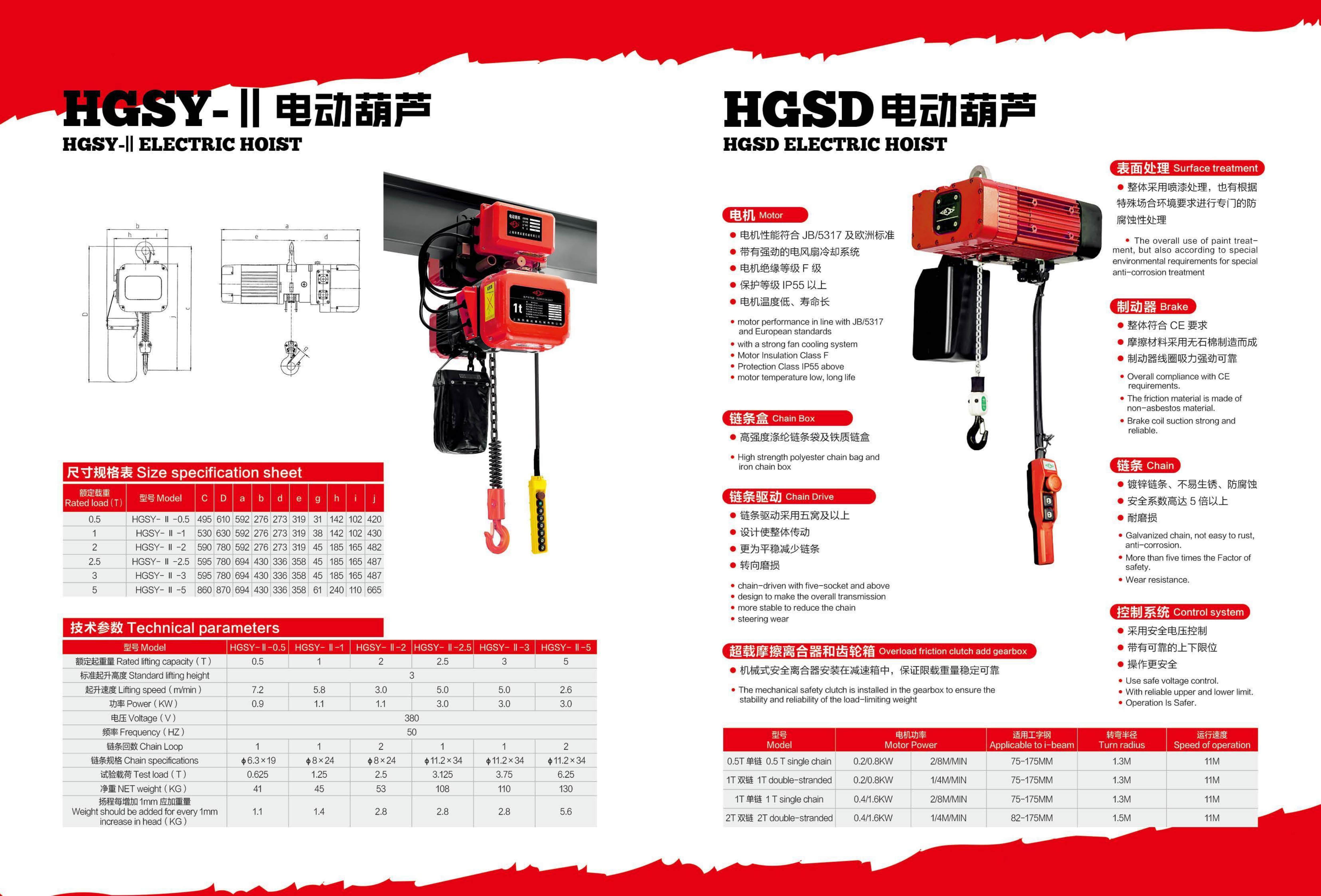
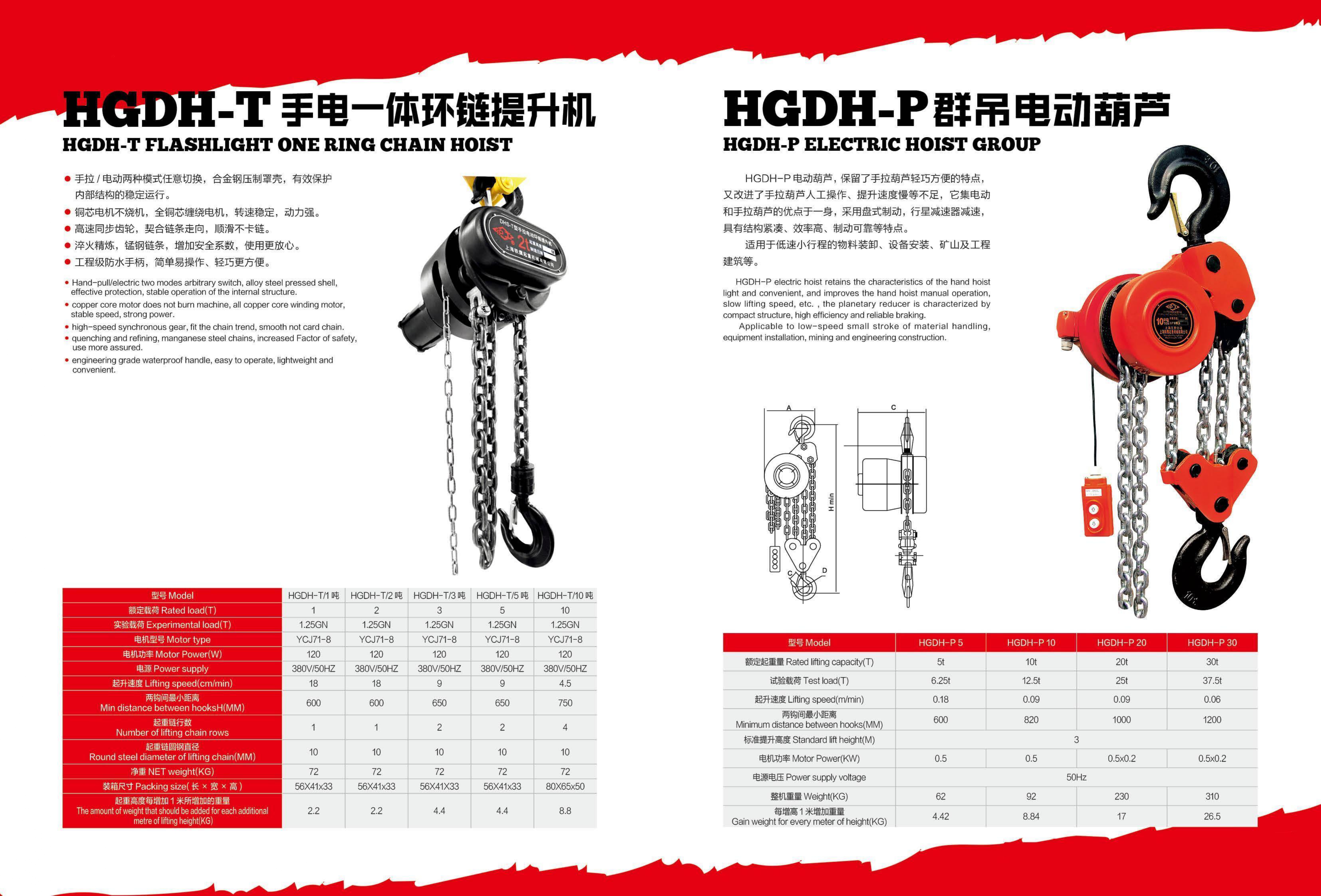
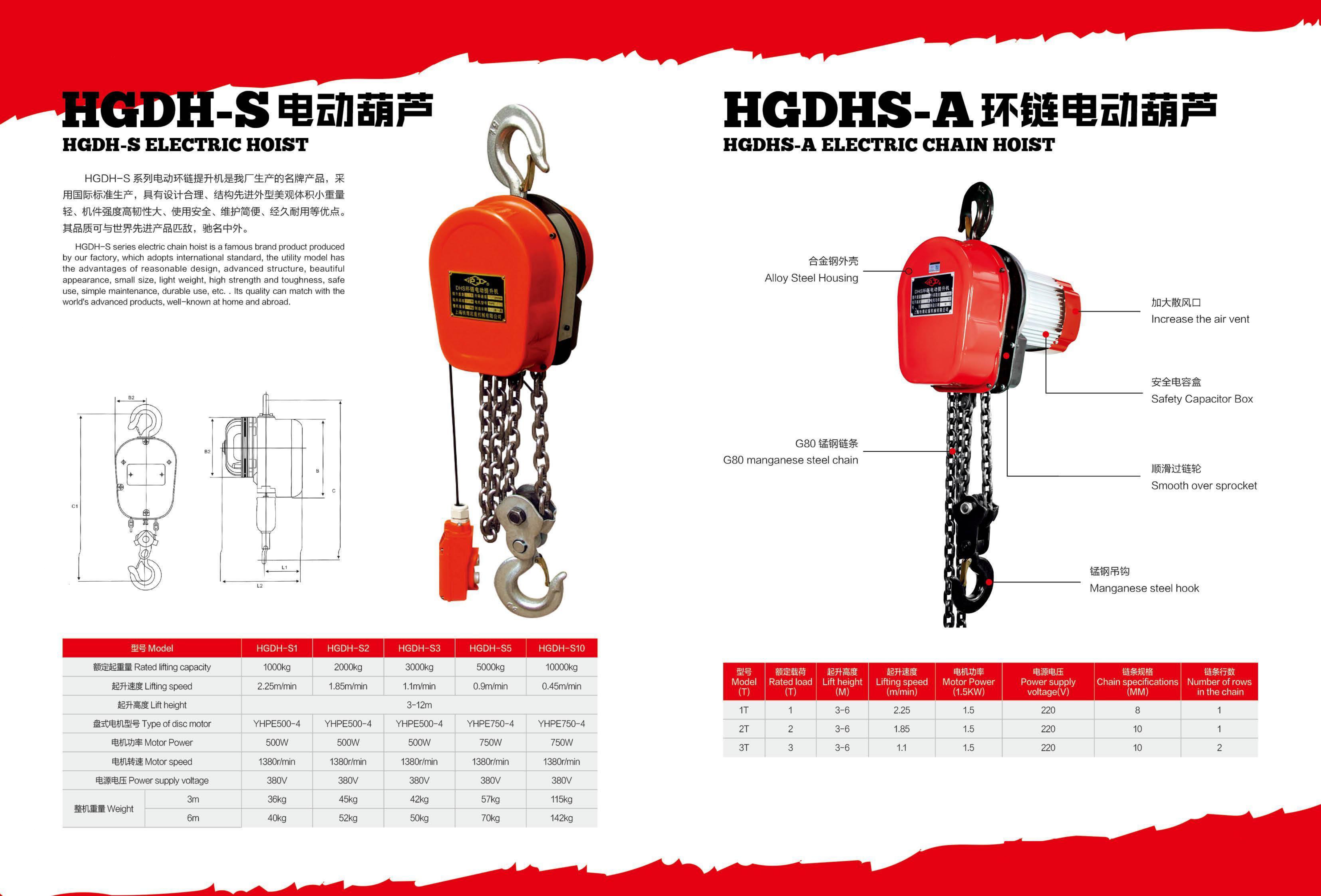
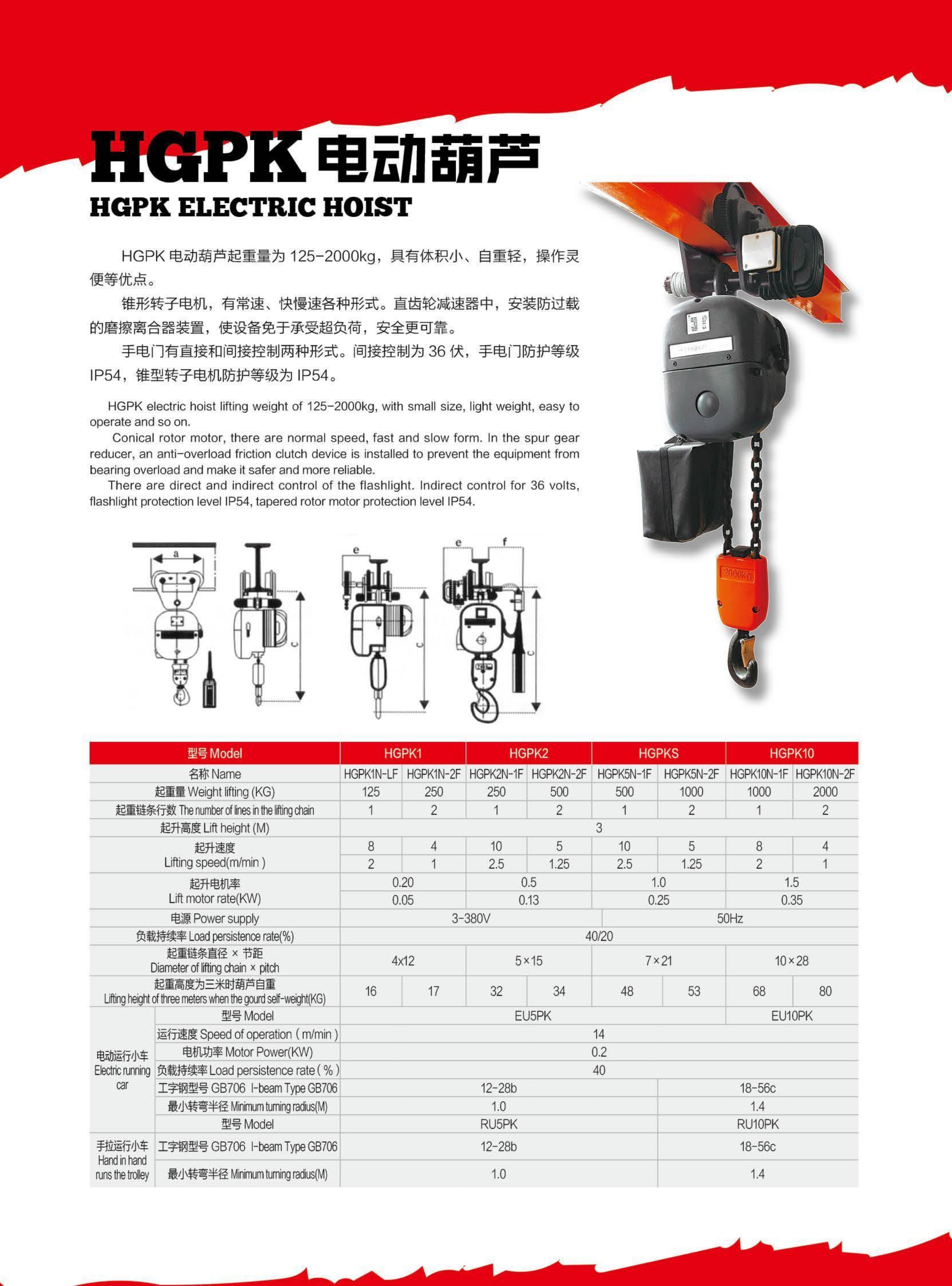
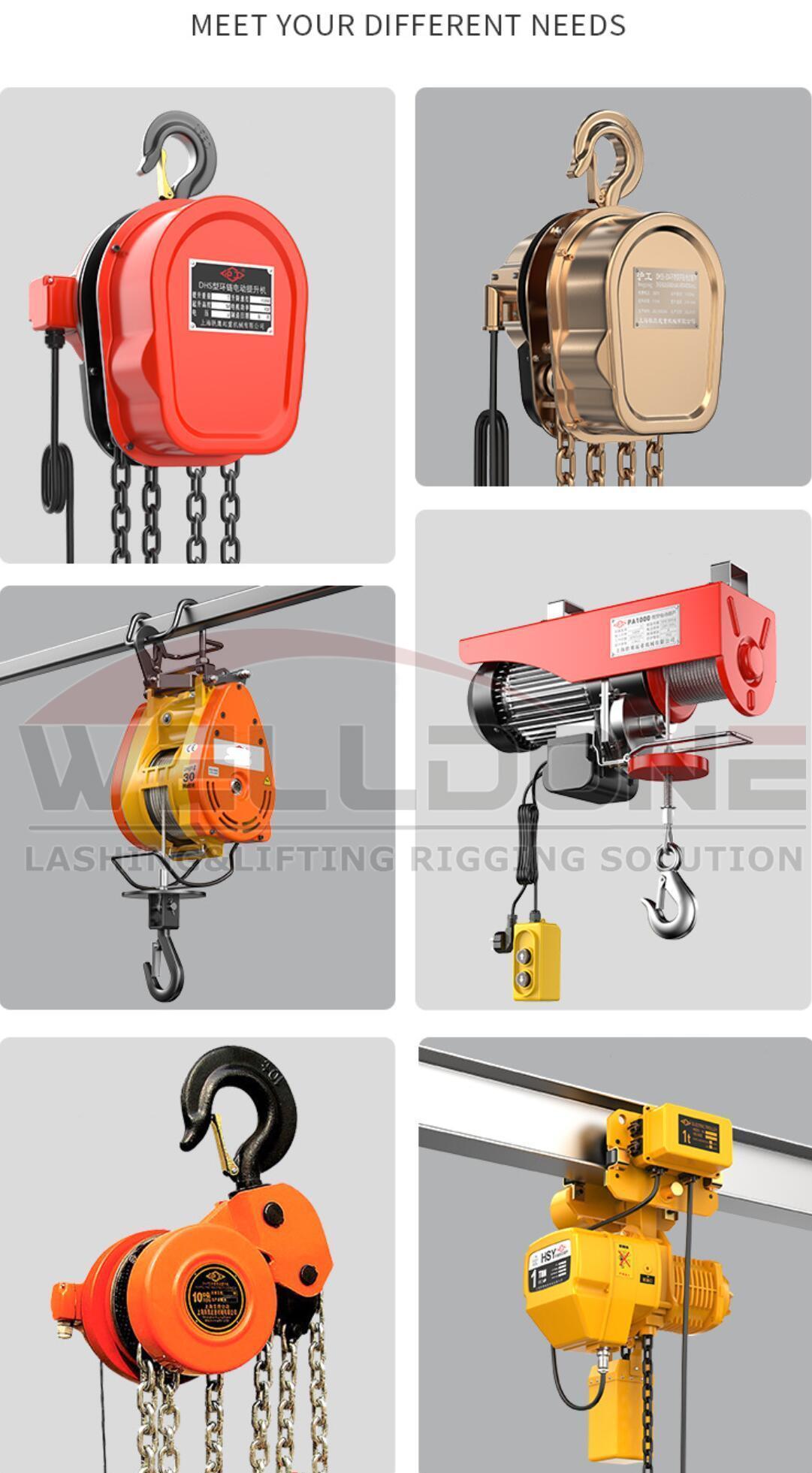
Model Number: DH-P/DH-S/DHS-A/PK/SY/SD
-
Cautions:
Proper operation and regular maintenance are essential for extending the service life of an electric wire rope hoist and ensuring workplace safety.
- Never exceed the rated lifting capacity.
- Inspect the steel wire rope regularly for broken wires, corrosion, deformation, and other signs of damage.
- Check the hook, safety latch, and connections before operation.
- Ensure the braking system and limit switches function correctly.
- Avoid lifting loads at an angle or dragging loads horizontally unless the equipment is specifically designed for such operations.
- Keep personnel away from suspended loads.
- Do not allow anyone to stand or walk beneath a suspended load.
- Disconnect the power supply before performing maintenance or repairs.
- Arrange regular inspections and maintenance according to the manufacturer’s instructions and applicable safety regulations.
Products categories
-

Construction 1 / 2 / 3 Single / Double / Triple...
-

Zinc Alloy Die Cast Fixed Type Single Double Wh...
-

Polyamide Nylon Sheave Deflection Ratchet Rope ...
-

Aluminum Body Manual Wire Rope Pulling Hoist Ca...
-

1-20Ton HSZ Type Round Chain Hoist Pulley Lifti...
-

0.75-9Ton HSH-VA Type Chain Hoist Lever Block