Shipping Container Bridge Fittings Clamp 280MM 380MM


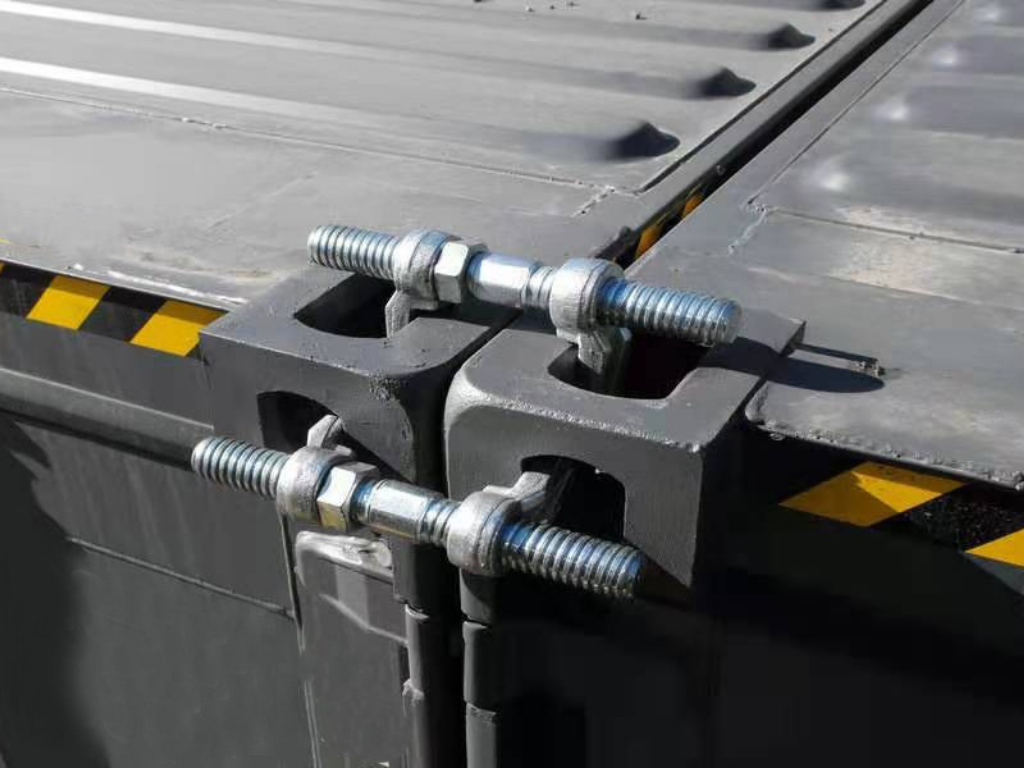
Bridge fittings for shipping containers are specialized container securing devices designed to connect two adjacent containers horizontally. They are widely used in container shipping, marine transportation, ports, terminals, and container storage yards where multiple containers need to be securely joined together.
Bridge fittings, also known as container bridge clamps or container connecting devices, are mechanical connectors used to secure two shipping containers side by side.
Unlike twist locks, which primarily connect containers vertically through their corner castings, bridge fittings are designed to connect adjacent containers horizontally through their side corner castings.
Key Features of Container Bridge Fittings
1. Strong Steel Construction
Bridge fittings are generally manufactured from high-strength carbon steel or other suitable steel materials. Their heavy-duty construction provides the mechanical strength required for demanding container handling and transportation environments.
2. Secure Horizontal Connection
The fitting connects the side corner castings of two adjacent shipping containers, helping prevent unwanted separation and relative movement between them.
3. Adjustable Tightening Mechanism
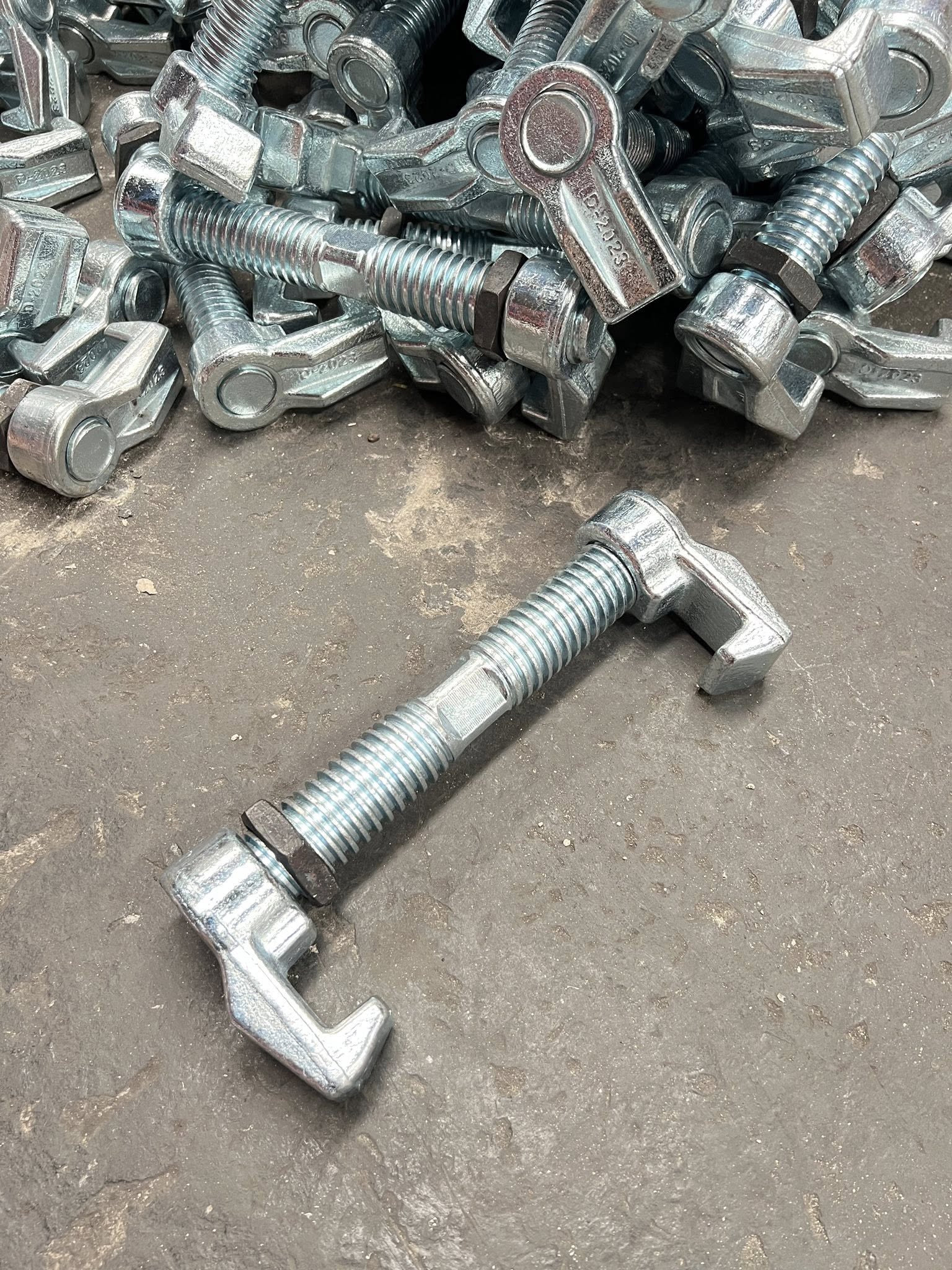
Many bridge fittings feature a threaded spindle or screw mechanism. By rotating the central tightening component, operators can adjust the clamping force to achieve a secure connection.
4. Corrosion-Resistant Surface Treatment
Since container fittings are frequently exposed to rain, humidity, salt spray, and harsh marine conditions, surface treatments such as hot-dip galvanizing or protective painting can help improve corrosion resistance and extend service life.
5. Easy Installation and Removal
The mechanical design allows operators to install and remove bridge fittings using appropriate hand tools, making them practical for container yards, shipping terminals, and temporary container installations.
Applications
Bridge fittings are widely used in different container handling and storage environments.
1. Shipping and Marine Transportation
In marine applications, bridge fittings can be used as part of container securing arrangements to connect adjacent containers and help maintain their relative positioning.
2. Container Terminals and Ports
At container terminals, bridge fittings are used when containers are arranged side by side and require additional horizontal connections.
3. Container Storage Yards
For container storage areas, bridge fittings can help connect adjacent containers and maintain an organized storage arrangement.
4. Temporary Container Buildings
In certain temporary container installations, bridge fittings can be used to connect adjacent container units, subject to the structural design and applicable safety requirements.
5. Container Transportation and Logistics
Bridge fittings are useful accessories for container operators, shipping companies, freight terminals, and logistics equipment suppliers.
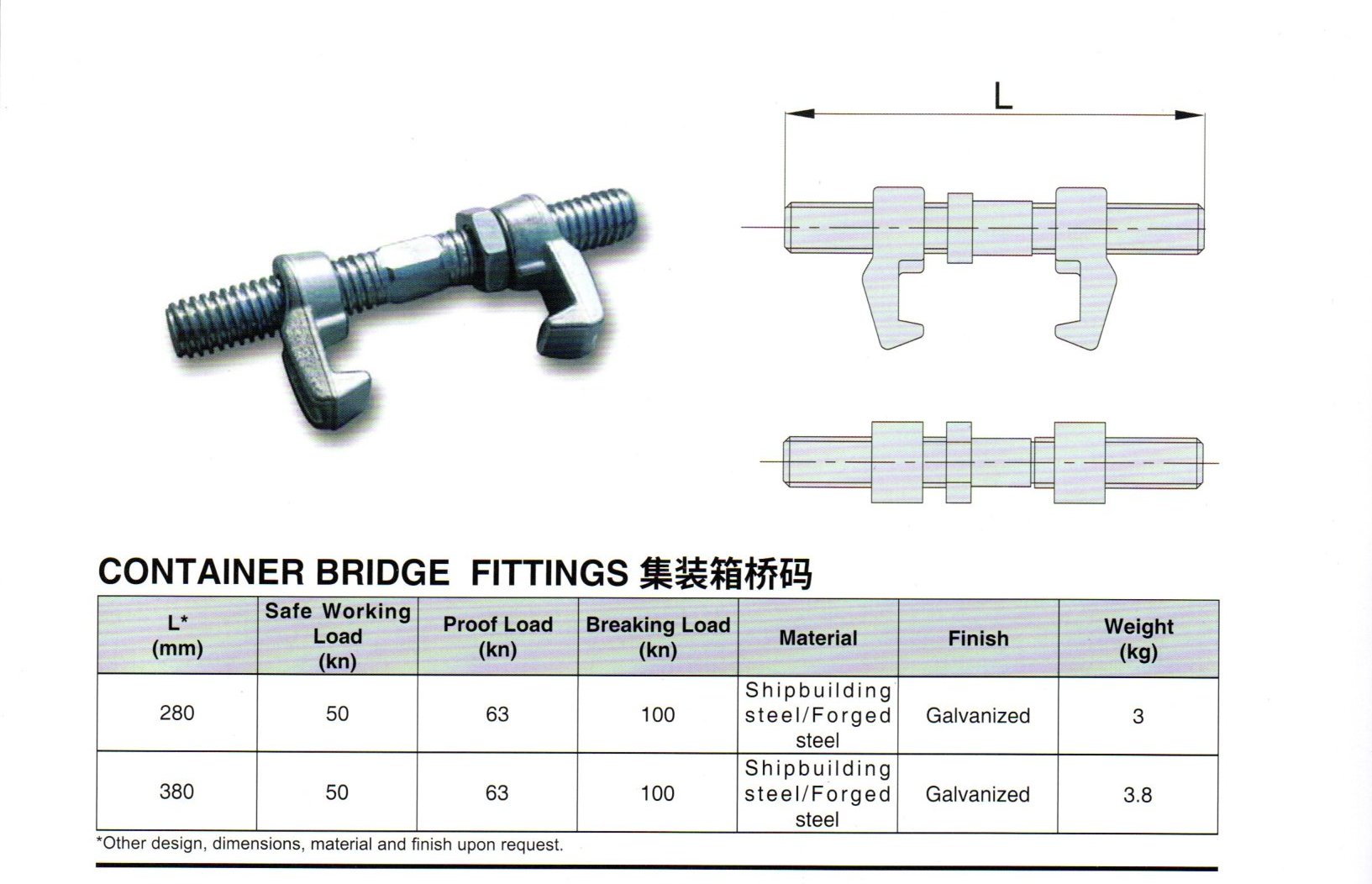
Model Number: BF-108

-
Cautions:
Proper installation is essential for reliable performance. Before using bridge fittings, operators should:
- Inspect the fittings for cracks, deformation, corrosion, and thread damage.
- Ensure the connecting components are compatible with the container corner castings.
- Install the fittings according to the manufacturer’s instructions.
- Tighten the mechanism to the specified requirements without excessive force.
- Check that the connection is properly engaged before operation.
- Regularly inspect fittings during service, especially in marine and outdoor environments.