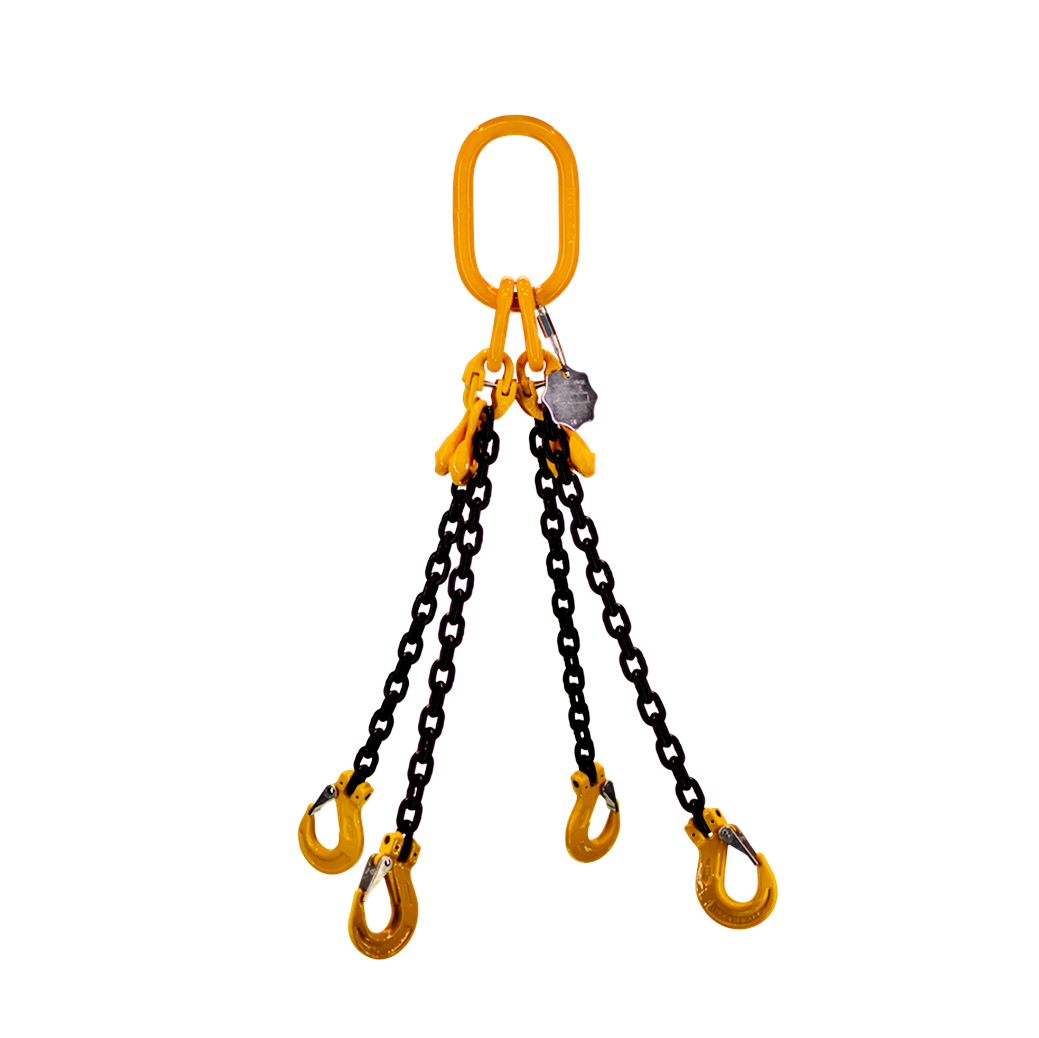
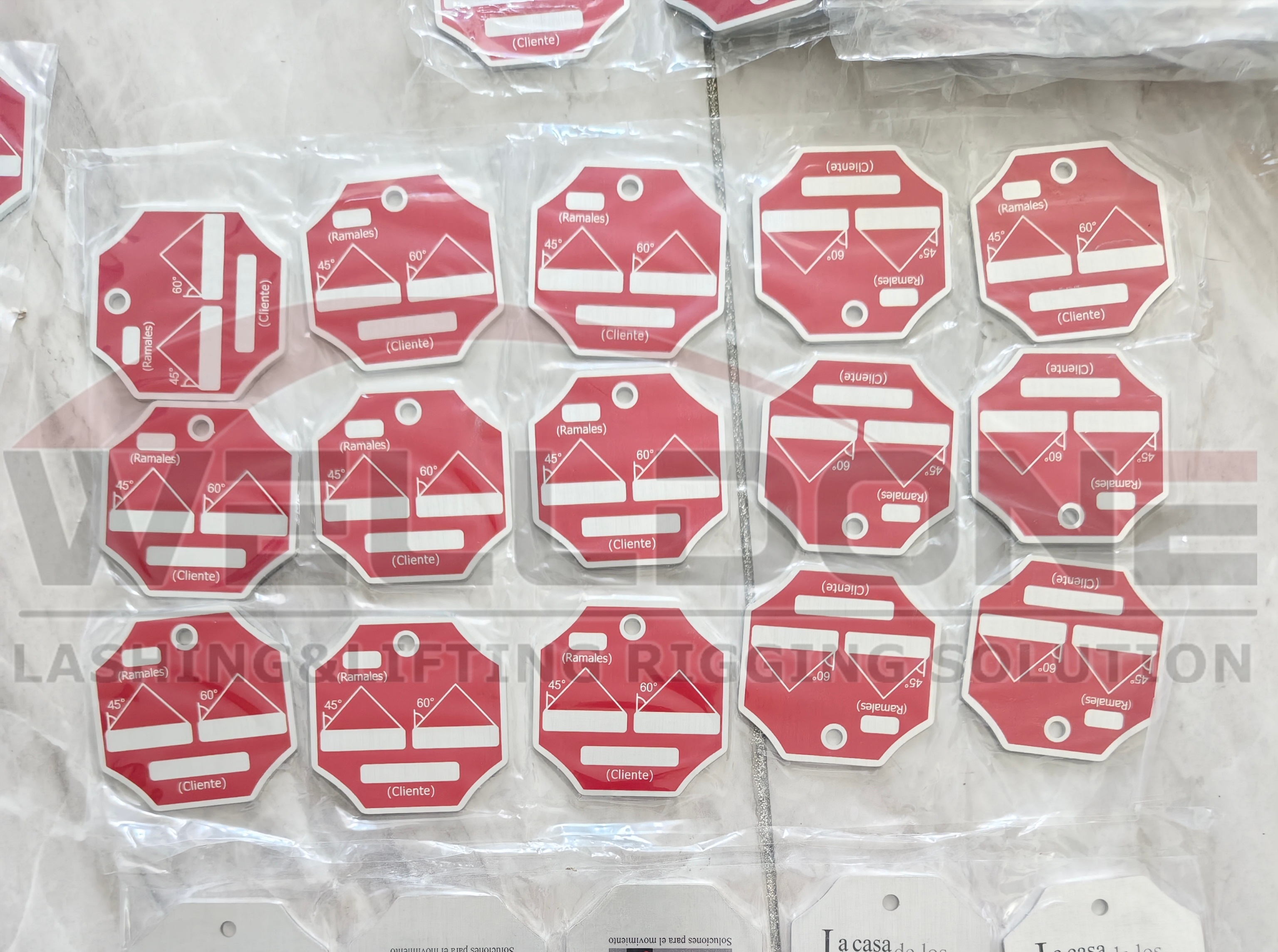
Customized Stainless Steel / Aluminum Chain / Wire Rope Sling Identification Tags


Chain slings and wire rope slings are widely used for lifting and material handling in construction, manufacturing, shipbuilding, ports, warehouses, and heavy industries. Because these lifting assemblies are safety-critical equipment, clear identification is essential.
Chain and wire rope sling identification tags provide important information about a sling’s capacity, configuration, identification number, and other specifications. Properly marked tags help operators select the correct sling, verify its rated capacity, and support inspection and traceability throughout its service life.
What Are Chain and Wire Rope Sling Identification Tags?
A chain or wire rope sling identification tag is a durable tag or metal plate permanently or securely attached to a lifting sling. It serves as the sling’s identification record and provides key information needed before and during lifting operations.
Depending on the sling type, manufacturer, applicable standard, and customer requirements, a tag may include information such as:
- Manufacturer or supplier name
- Sling identification number
- Working Load Limit (WLL)
- Sling type and configuration
- Chain or wire rope diameter
- Length
- Number of legs
- Applicable lifting angle
- Grade or material
- Manufacturing date or batch number
- Applicable standard
- Inspection or certification information
- Customer or asset reference number
The exact information required can vary according to the product type and applicable regulations or standards.
Why Are Sling Identification Tags Important?
1. Quick Identification
A lifting area may contain many slings with different lengths, capacities, and configurations. An identification tag allows operators to quickly distinguish one sling from another.
Instead of measuring the sling or searching through production records, users can refer to the information marked on the tag.
2. Working Load Limit Reference
One of the most important pieces of information on a sling tag is its Working Load Limit (WLL).
The WLL tells the user the maximum permitted load for the sling under the specified conditions and configuration. For multi-leg slings, the rated capacity can depend on the number of legs and the included angle.
Operators should always refer to the actual WLL marking and manufacturer’s documentation rather than estimating the capacity based only on chain or wire rope diameter.
3. Traceability
Identification numbers and batch information can help connect an individual sling with its manufacturing and inspection records.
This is particularly valuable for industrial customers operating large numbers of lifting assemblies. A unique identification number can make it easier to maintain equipment registers and track inspections.
4. Supports Inspection and Maintenance
Sling tags can help inspectors identify the correct sling and compare the physical product with its original specifications.
During periodic inspection, information such as the sling ID, length, type, and rated capacity can be checked against company records.
5. Improved Lifting Planning
Before a lifting operation begins, operators need to know whether the available sling is appropriate for the load. Clear identification information makes this process faster and reduces the risk of selecting a sling with unsuitable specifications.
Common Tag Materials
Because lifting slings are frequently exposed to abrasion, moisture, dirt, oil, and outdoor conditions, identification tags need to remain readable throughout normal service.
Stainless Steel Tags
Stainless steel provides excellent corrosion resistance and is suitable for demanding industrial and outdoor environments. It can be engraved, stamped, etched, or laser marked depending on the customer’s requirements.
Aluminum Tags
Aluminum tags are lightweight and can be marked with detailed information. They are suitable for applications where weight and corrosion resistance are important considerations.
-
Cautions:
When selecting a tag for chain or wire rope slings, consider:
Durability: The tag should withstand normal abrasion and environmental exposure.
Legibility: Markings should remain easy to read throughout the expected service life.
Attachment: The tag should be securely attached without interfering with the sling’s operation or creating an unsafe snagging point.
Material: Select a tag material appropriate for moisture, chemicals, temperature, abrasion, and other environmental conditions.
Information: Include the identification and capacity information required for the specific sling.
Traceability: Unique identification numbers can be useful for inventory management, inspection records, and quality control.