Manual Banding Tool PET Polyester Composite Cord Strapping Tensioner


In modern packaging and logistics, securing loads safely and efficiently is essential. One of the most reliable tools for this purpose is the manual composite cord strapping tensioner. Designed for use with composite (synthetic fiber) strapping, this handheld device allows operators to apply precise tension without the need for electricity or pneumatic systems. Its simplicity, durability, and portability make it a popular choice across industries such as shipping, warehousing, construction, and manufacturing.
A manual composite cord strapping tensioner is a mechanical tool used to tighten composite strapping around goods or pallets. Composite cord strapping, often made from high-strength polyester fibers coated with polymer, offers flexibility and strength similar to steel but without the risk of injury from sharp edges.
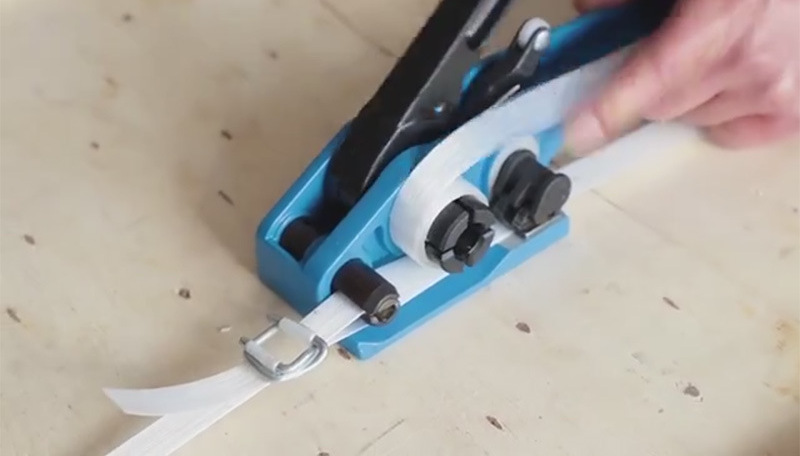
The tensioner works by gripping the strap and applying force through a ratcheting or lever mechanism, allowing the user to tighten the strap securely around a load.
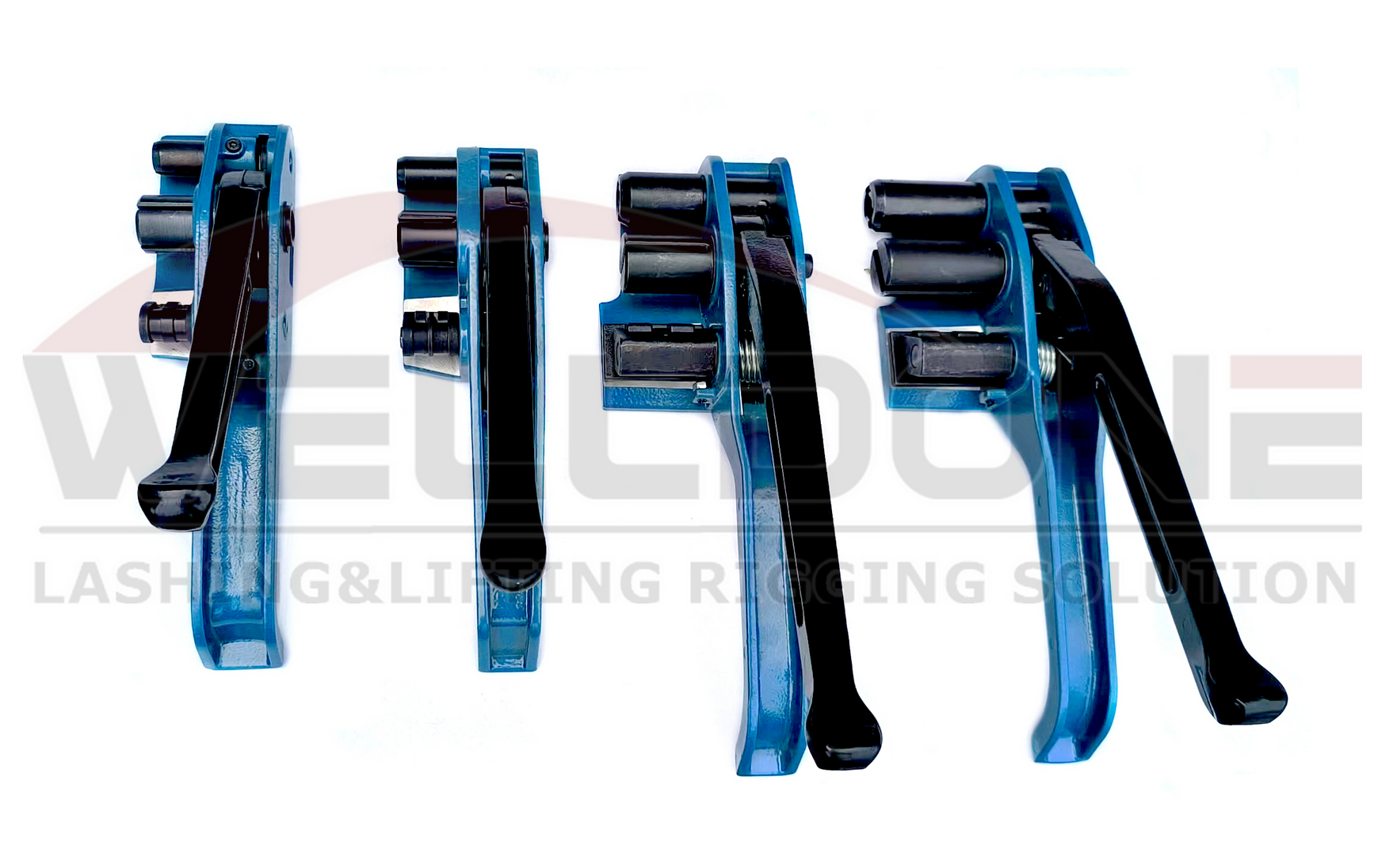
A typical manual tensioner consists of the following parts:
- Handle/Lever: Provides the mechanical advantage needed to apply tension.
- Gripper/Feed Wheel: Holds and pulls the strap as tension is applied.
- Base Plate: Supports the tool and stabilizes it during operation.
- Cutter (optional): Some models include a built-in blade for trimming excess strap.
How It Works
Using a manual composite cord strapping tensioner involves a straightforward process:
- Wrap the Strap
Place the composite strap around the load and feed it through a buckle (usually a wire or phosphate-coated buckle). - Insert into Tensioner
Thread the free end of the strap into the tensioner’s gripper mechanism. - Apply Tension
Pump the handle or lever repeatedly. The tool grips and pulls the strap tighter with each movement. - Secure the Strap
Once the desired tension is reached, the buckle holds the strap in place through friction. - Cut Excess Strap
Use the tensioner’s cutter or a separate tool to remove excess material.
Advantages
1. Portability
Manual tensioners do not require power sources, making them ideal for on-site or remote operations.
2. Safety
Composite strapping is safer than steel; it does not snap back dangerously or have sharp edges.
3. Cost-Effective
Lower initial investment and maintenance costs compared to pneumatic or battery-powered tools.
4. Versatility
Suitable for a wide range of applications, including securing irregular or fragile loads.
5. Durability
Constructed from hardened steel or alloy materials, these tools are built for long-term use.
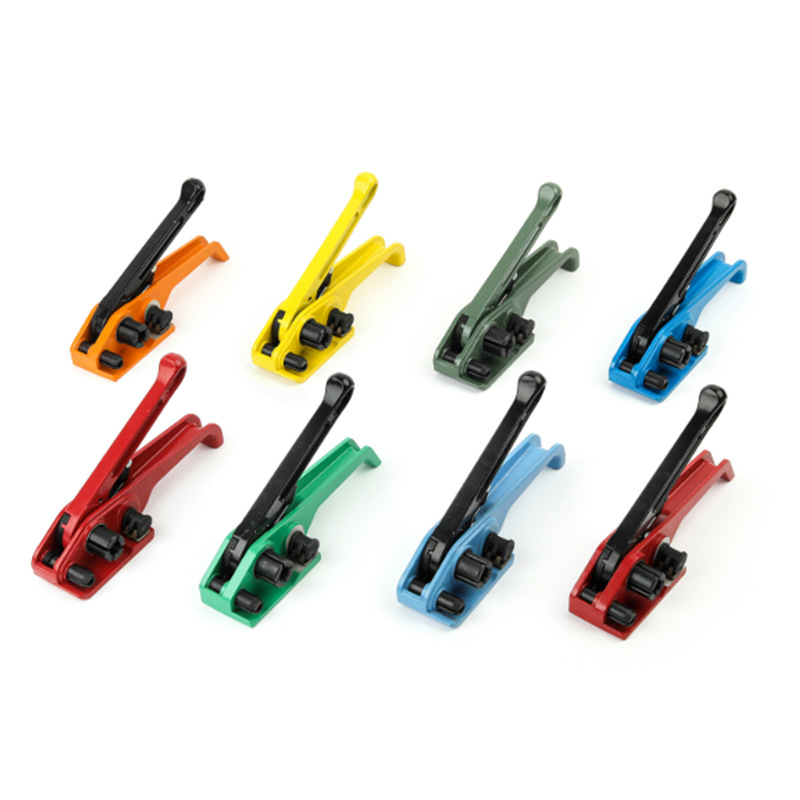
Model Number: XW20/25/32/50
-
Cautions:
To ensure optimal performance and longevity:
- Clean regularly: Remove dust and debris from moving parts.
- Lubricate components: Apply light oil to the gripper and gears.
- Inspect for wear: Check the feed wheel and cutter blade for damage.
- Store properly: Keep in a dry place to prevent rust and corrosion.
Logistics and shipping: Securing pallets and cargo
Construction: Bundling materials like lumber, pipes, and bricks
Agriculture: Packing hay bales or equipment
Manufacturing: Stabilizing products during transport